Choose the product surface.
Specify the region of interest on each product. Exclude the conveyor, tray, empty gaps and other surfaces from the intended product measurement.

Use Case
Baking temperature monitoring at oven exit compares a defined product surface region with a plant-approved temperature range at a specified time after exit. A qualified radiometric thermal source provides the measurement; United Vision can evaluate compatible thermal evidence within the inspection workflow. Surface temperature alone does not establish core temperature or doneness.
Bring the oven-exit surface condition into a defined inspection workflow, with a qualified thermal measurement, a product-specific range and a clear plant response.
Inspection scope
A useful check starts with the product, the surface region and the moment of measurement. Establish these before selecting the thermal source or applying a range. United Vision gives plant teams a repeatable workflow for defining, validating and updating the inspection as production changes.
Specify the region of interest on each product. Exclude the conveyor, tray, empty gaps and other surfaces from the intended product measurement.
Define the capture position and elapsed time after exit. Qualify line speed, product spacing and presentation so readings describe comparable conditions.
The process or quality owner approves the range for that product and measurement setup, along with how region values are summarized and exceptions handled.
Inspection workflows · After oven exit
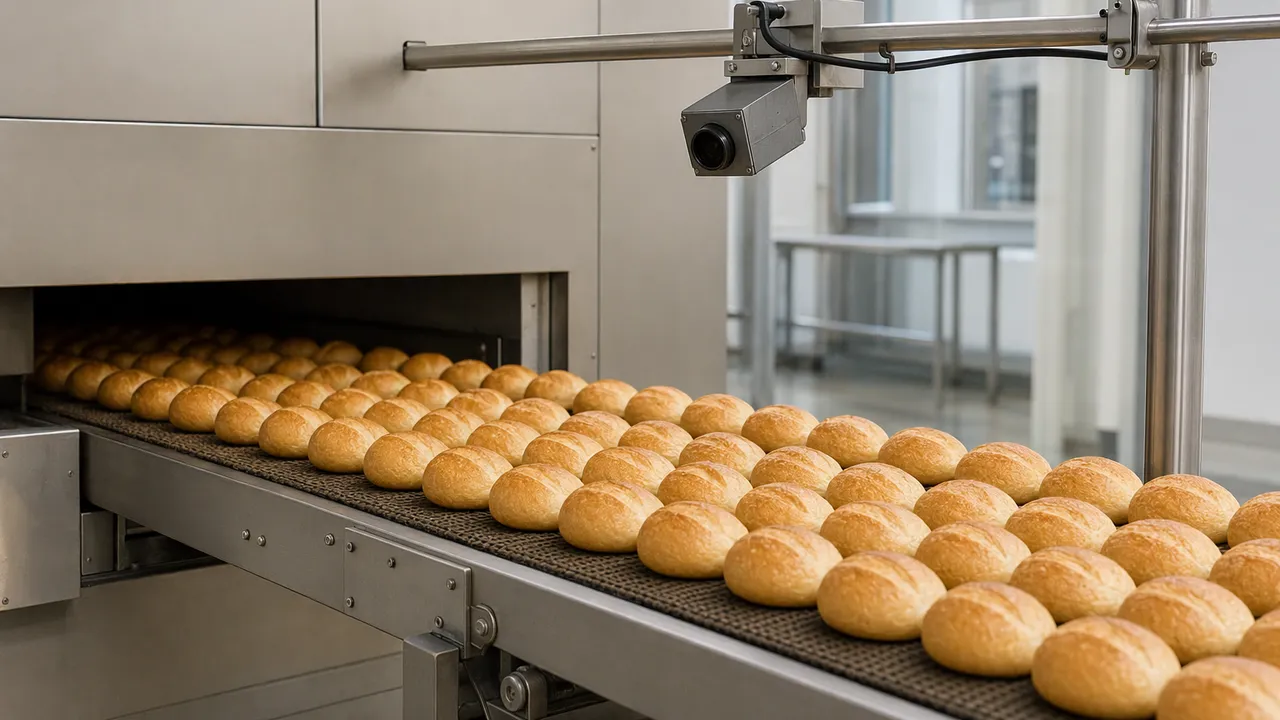
Present the product to a qualified thermal source at the agreed oven-exit inspection point. Evaluate the intended surface region against the approved range for the selected product and record the context needed for review.
The measurement describes the surface at that point in the process. Core temperature, doneness and any required food-safety release criteria need their own validated controls.
Measurement qualification
The thermal camera and measurement setup create the source data. A visual model cannot correct an unqualified temperature measurement or turn a color palette into a calibrated reading.
Qualify the thermal camera, calibration, lens, focus, working distance, resolution, measurement range and available data output. Confirm the required interface before treating an installed camera as compatible.
Assess product-surface emissivity, reflected oven or equipment heat, viewing angle, steam and any protective window. Different finishes or product surfaces may require a revised measurement setup.
Account for product size, spacing, trays, conveyor motion and partial views. Agree how the workflow handles an obscured region, a product outside the expected view or a delayed capture.
See the broader AI thermal process monitoring method for source-data and thermal-pattern qualification. Supported devices and the available temperature-data interface must be assessed for this specific oven-exit use case.
Plant-owned lifecycle
The plant defines the approved surface range and the response. Engineering qualifies the measurement path, and quality or process owners approve the decision before production use.
Collect qualified thermal evidence across products, shifts, line speeds and normal oven states. Include known deviations and unreliable or unavailable readings.
Record the product, surface region, measurement basis, time after exit and approved range. Specify the response and the context needed to identify affected product.
Configure the inspection from compatible source data. Train visual pattern checks where appropriate; numerical ranges remain grounded in the qualified measurement.
Use evidence separate from training. Check missed deviations, false alerts, data quality, decision timing, product association and the full review response.
Review recipe, surface, camera, environment and line changes. Update the definition or model and revalidate affected conditions before redeploying to the edge.
Production inference runs on a supported factory-owned edge device. Model training uses a supported customer-owned cloud account. Learn how the plant-controlled inspection platform supports capture, training, deployment and updates. The guide to evaluating existing cameras for AI inspection explains image access, presentation and timing to review alongside this workflow's radiometric measurement requirements.
Action and review
Agree the response before relying on a temperature decision. A result is useful only when the plant can identify the affected product and take the intended action.
Determine whether the decision concerns one product, a lane or a batch. Validate the association through stops, spacing changes and any agreed review or handling step.
Specify the owner who reviews out-of-range, uncertain and missing readings. Test the required event or handling interface and retain the evidence defined in the plant control plan.
Buyer questions
The measurement scope is product surface temperature at a defined point after oven exit. A qualified radiometric thermal source supplies the temperature data. The plant defines the surface region, capture timing, product variant and acceptable range before evaluating the workflow.
No. Surface temperature alone does not establish core temperature, doneness, a validated cooking or kill step, or food-safety release. Required product, process and core-temperature checks remain in the plant control plan.
An ordinary visible-light image does not measure surface temperature. A colorized thermal image without qualified radiometric data and its measurement context is also insufficient for a numerical temperature decision. The thermal source, data output and interface must be confirmed for the project.
The plant process or quality owner approves the range for the product, surface region and defined time after oven exit. Establish the measurement basis and response for values outside that range. No universal temperature range or baking threshold is assumed.
Calibration, surface emissivity, reflected heat, viewing angle, steam and any intervening window can affect the apparent thermal measurement. Qualify these conditions with the intended camera, product surface, optics and environment before relying on a temperature result.
Review the product definition, region, capture timing, approved range and image quality. Product size, finish, spacing, recipe and line-speed changes may move the process outside its validated conditions. Requalify the measurement and decision when required before redeployment.
Define a process or quality review response and keep the reading associated with the correct product, lane or batch context. Validate timing, missing-data behavior and any agreed handling interface. The responsible plant owner decides the required action and release.
Production inference runs on a supported factory-owned edge device, and model training uses a supported customer-owned cloud account. One recurring factory software license covers unlimited United Vision use cases inside the licensed factory. Hardware, cloud consumption, integration, implementation, support and validation are scoped separately.
Plan the inspection
Bring the product and recipe, surface region, oven-exit position, timing, approved range, thermal-camera details, available data and required response. Representative thermal evidence helps establish what still needs qualification.
Place the oven-exit check alongside the other defined inspection points in the food process.
Explore food inspectionConfirm the image and measurement path, edge requirements, interfaces and validation responsibility.
Review deployment readinessReview how customer images, trained models and customer-specific inspection IP remain with the customer.
Review data and IP ownershipPrepare a private inspection brief with the oven-exit station, target condition and costs still to scope. One recurring factory software license covers unlimited United Vision use cases inside the licensed factory. Hardware, cloud consumption, integration, implementation, support and validation are scoped separately.
Start with qualified thermal evidence, the plant-approved range and a clear response. Agree what the surface measurement can establish before production use.