Insights

Practical answers about AI visual inspection for manufacturing.

Use these guides to compare AI visual inspection with traditional machine vision, choose a defect-detection use case, evaluate existing cameras, understand self-service Vision AI and scale line inspection across a factory or multiple facilities.

In brief

The United Vision Insights library answers the questions manufacturing buyers ask about visual inspection, Vision AI, AI vision, computer vision, defect detection and line inspection. Each guide gives a direct answer, a practical decision framework and a clear path to the relevant platform or use-case page.

Search the library

Start with the question your team is asking.

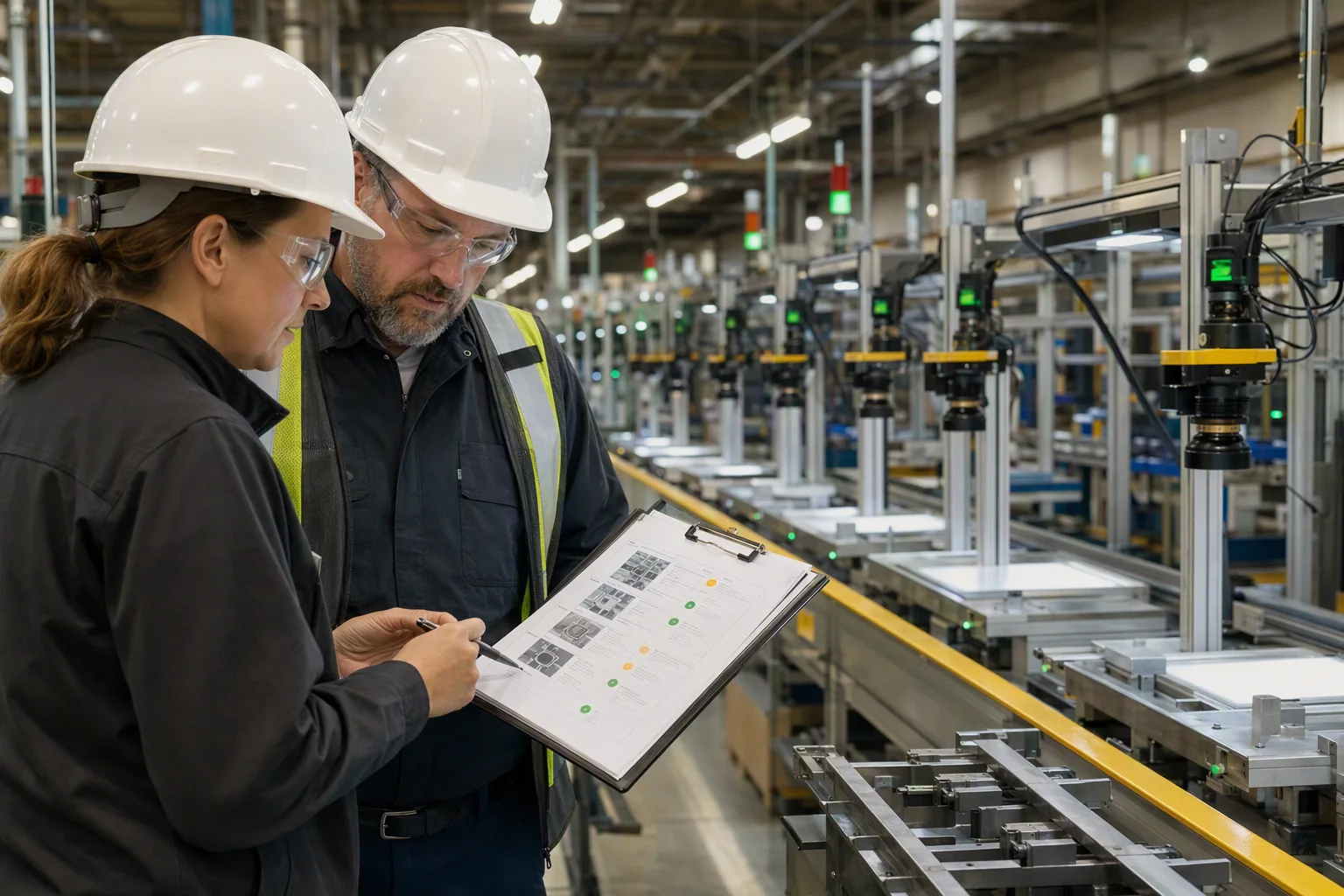
Plant leaders reviewing visual inspection opportunities beside a production line
Operations · Visual inspection strategy

Why manufacturing visual inspection use cases stay on the backlog

Plants often know where another visual check would help. The harder problem is creating an economical, maintainable path from that opportunity to a working inspection on the line.

Read the guide
Fixed and variable manufacturing inspection environments
Engineering · Category guide

AI visual inspection vs. traditional machine vision: where each fits

Stable rules favor deterministic systems; variable appearances may favor learning from representative production examples.

Read the guide
Manufacturing team prioritizing candidate visual inspection use cases
Planning · First deployment

How to choose the first AI visual inspection use case

The first use case should prove a complete operating workflow, not merely that a model can recognize an image.

Read the guide
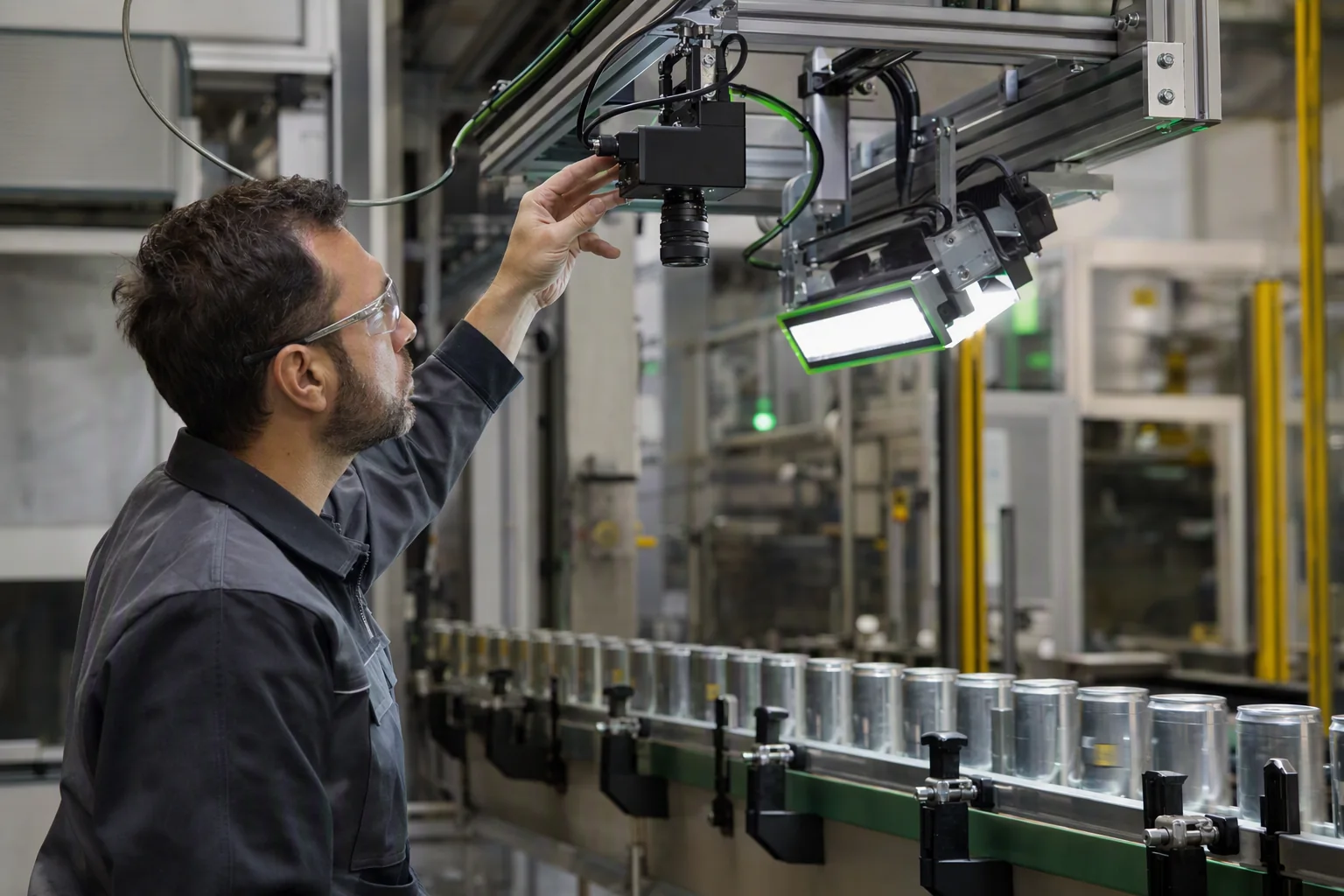
Plant experts working with an industrial camera and edge deployment equipment
Automation · Operating model

What self-service Vision AI actually means for plant teams

Self-service is the ability to operate, improve and repeat the inspection-model lifecycle with plant expertise in control.

Read the guide
Automation engineer evaluating an existing industrial camera and lighting
Technical readiness · Cameras and edge

Can AI visual inspection use existing factory cameras?

Often worth evaluating, never safe to assume. The camera is only one part of the imaging and deployment system.

Read the guide
Manufacturing evidence and model versions reviewed over time
Operations · Model lifecycle

How to keep visual inspection models current as production changes

An inspection is not finished at deployment. Products, processes, materials, defects and operating conditions keep changing.

Read the guide
Manufacturing leaders reviewing camera-enabled inspection stations across a factory
Strategy · Factory economics

One-off vision projects vs. a factory-wide inspection platform

The first inspection project can look affordable. The tenth reveals whether the operating model was designed to scale.

Read the guide
A modern factory with multiple camera-enabled inspection points
Scale · Multi-site operations

How to scale visual inspection across lines and facilities

Scale comes from a repeatable operating system, not from copying a model into a line with different conditions.

Read the guide

Authority architecture

Eight retained guides. One connected decision journey.

The library is organized to help a buyer move from category understanding to readiness, ownership, economics and scale.

Discover

Why opportunities stall.

Understand the cost, dependency and architecture barriers that keep known inspections on the backlog.

Evaluate

Choose the right method.

Compare deterministic machine vision, learned visual inspection and hybrid approaches against the problem.

Prepare

Qualify data and deployment.

Define the first use case, assess existing cameras and plan validation before production release.

Scale

Own the lifecycle.

Build the operating model for model updates, factory economics and multi-site replication.

Frequently asked questions

Choosing AI visual inspection for your factory.

Practical answers about cameras, edge inference, cloud ownership, deployment, validation and factory-wide pricing.

What is AI visual inspection?

AI visual inspection uses computer vision models trained on production images to recognize defined defects, objects, text, measurements or other visible conditions. On a manufacturing line, it turns camera evidence into a decision such as accept, flag for review or trigger a configured response.

The starting point is the inspection decision, not the algorithm. Define what acceptable and unacceptable production look like, make the condition visible through suitable imaging, and validate the result against plant requirements. United Vision connects that work to a self-service lifecycle so plant teams can build, deploy and maintain inspections, then repeat the process for additional use cases.

Explore the United Vision platform

How is AI visual inspection different from traditional machine vision?

Traditional machine vision uses engineered rules, such as edges, thresholds, geometry and pattern matching, to inspect a controlled scene. AI vision learns relevant visual patterns from representative examples, making it useful when defects or acceptable products vary in ways that are difficult to describe with fixed rules.

Neither approach is automatically better for every inspection. Precise, repeatable geometric checks may favor conventional methods; variable textures or defect appearances may favor AI; some applications benefit from both. Compare them using the same production evidence, acceptance criteria and response requirements. Also evaluate who can update the inspection when the product, process or defect definition changes.

Compare AI inspection and traditional machine vision

Can we use existing factory cameras?

Yes, when the existing cameras can provide suitable images through a supported connection. United Vision is hardware-agnostic: it does not require a proprietary camera or edge appliance. Plants can reuse qualified equipment or choose supported cameras and edge devices that fit the inspection.

Assess the full image path before replacing hardware. The smallest relevant feature must remain visible at production speed, with appropriate optics, lighting, exposure, mounting and part presentation. Confirm image access, triggering and the connection to the edge device. A camera that provides a useful general view may still need a different lens, lighting arrangement or position for a specific defect-detection task.

Assess existing camera readiness

Where does production inference run?

United Vision production inference always runs on a supported factory-owned edge device close to the line. The trained model evaluates the captured image there, so the live inspection verdict does not require a round trip to a vendor cloud.

Cloud services and the production decision path have different roles. United Vision cloud services run in the customer-owned cloud account, while the edge device handles live inference. During deployment, qualify edge capacity, camera connections, power, networking and the path from verdict to plant response. Define update procedures and failure behavior as part of that design; edge inference alone is not a promise that every administration or update function operates offline.

See the cameras, edge and cloud architecture

Can we use our preferred cloud?

Yes. United Vision is cloud-agnostic, with cloud services deployed in a supported cloud environment chosen by the customer and an account owned by the customer. Customer-controlled cloud means ownership of the cloud account itself, not simply access to a tenant in a United Vision-owned account.

Your IT team can evaluate the proposed environment against its infrastructure and governance requirements. Confirm the supported configuration, region, access responsibilities, data flows, retention and support arrangements during scoping. These details belong in the deployment design and commercial agreement. Cloud choice does not change the inspection architecture: production inference remains on the factory-owned edge device.

Understand customer data and cloud ownership

How fast can an AI inspection be deployed?

A suitable United Vision inspection can deploy in days. The fastest path starts with a clearly defined decision, representative images, a usable camera view and a known production response. Plant teams then move through labeling, training, validation and deployment to the edge.

Separate the time needed to develop the inspection from any work needed to prepare the line. New lighting, fixtures, image access, controls integration or additional validation may affect the schedule. A focused working session should identify those dependencies, the evidence required for release and who owns each step. That gives the plant a practical deployment plan, not just a model demonstration.

Review the production deployment lifecycle

How many images are needed to train a model?

The required image set depends on the inspection, the range of acceptable production and the defects the model must distinguish. A simple, stable condition may need less evidence than an inspection spanning multiple products, materials, shifts or subtle defect types. There is no single image count that establishes production readiness.

Collect representative acceptable and unacceptable examples, including borderline cases and normal variation in orientation, lighting and appearance. Keep a separate validation set that was not used for training. If defects are rare, plan how the team will obtain and review credible examples. Add evidence where testing exposes gaps rather than collecting large numbers of near-identical frames.

Plan the evidence for a first use case

Do plant teams need data scientists?

No data scientists are required for routine United Vision use. The self-service workflow lets qualified plant teams apply their process knowledge to capture examples, label conditions, train and validate models, deploy them to the edge, and update them as production changes.

Plant expertise remains central: someone must define the defect, resolve ambiguous examples, agree release criteria and own the production response. Self-service does not eliminate lighting, integration, validation or change-control work. Implementation support is available when needed. The distinction is that routine improvements and additional inspections can follow a plant-controlled process instead of becoming a new vendor or specialist project each time.

Understand full-lifecycle self-service

Can the system meet production-line speed?

United Vision supports sub-50ms model verdicts, with production inference running at the edge. Whether an inspection meets line speed depends on the complete path from image capture to the required action, not only the time taken by the model.

Work backward from takt time, part spacing and the distance to a reject, routing or review point. Include exposure, image transfer, edge processing, controls communication and downstream equipment response. Test the selected camera and edge configuration at production load, including expected variation and peak throughput. Define what the line should do if an image is missing or a result arrives too late, before releasing the inspection.

Check timing and deployment readiness

How should accuracy be validated?

Validate the inspection against an agreed, representative test set and the decision the plant needs to make. Measure false accepts, where defective product passes, and false rejects, where acceptable product is rejected. A single headline accuracy percentage can hide important differences between defect classes or production conditions.

Include normal variation, difficult cases, product variants and relevant shift conditions. Keep validation images separate from training evidence and agree thresholds, review rules and release ownership before go-live. Test the complete line workflow as well as the model. After release, review new evidence and revalidate when changes to the product, camera, lighting or defect definition could affect the decision.

Plan validation and production release

How does an inspection connect to the line?

A line inspection needs a defined path from capture trigger to image, edge verdict and plant response. The response might record evidence, alert an operator, request review or pass a result to a qualified controls interface for routing or rejection.

Map that sequence with operations and controls engineers. Specify how the result stays associated with the correct part, which signals or interfaces are required, how much response time is available and what happens if a camera, device or connection fails. Qualify each interface for the actual line rather than assuming universal PLC or system compatibility. Visual inspection should not replace required safety-rated controls or protective systems.

Map the inspection-to-line response

How does United Vision pricing scale?

One factory. One price. Unlimited use cases. United Vision uses a recurring factory software license, so adding another qualified inspection within the licensed factory does not require another United Vision use-case software license.

Compare factory-wide economics, not just the first inspection quote. Consider how costs change as you add use cases and who performs ongoing updates. Cameras, edge equipment, cloud infrastructure, integration, services and validation remain distinct items to scope; unlimited use cases does not mean unlimited hardware or implementation work. Additional factories need their own agreed licensing scope. This separates the software expansion model from the physical and operational work each inspection requires.

Explore factory-wide pricing

Turn a question into an inspection plan.

If an article maps to a current production opportunity, bring the images, process facts and operating decision to a focused working session.

Book a working session